Introduction
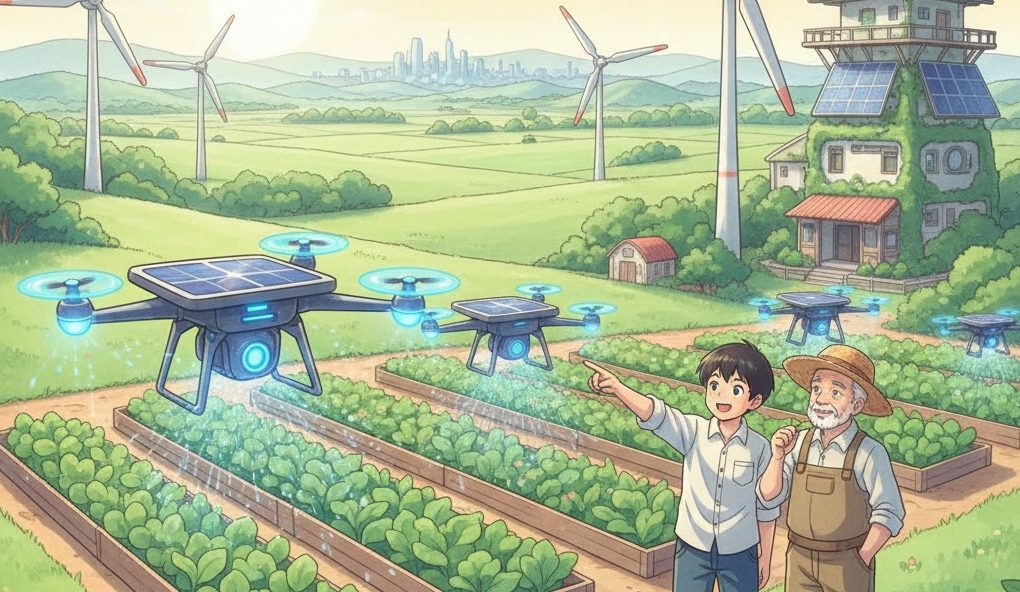
The future of organic farming looks strong and promising for farmers around the world. As people become more aware of food quality and soil health, demand for organic produce is increasing every year.
One major advantage of organic farming is the ability to grow multiple crops together safely. For example, growing spinach and okra on the same farm provides both quick and long-term income without harming the soil.
This guide explains how organic farming will shape the future of agriculture and how farmers can benefit by adopting natural and sustainable practices.
Overview of Spinach and Okra Crops
Spinach is a short-duration leafy vegetable that grows well in cool to mild weather. It matures quickly and allows multiple harvests in a short period.
Okra is a long-duration warm-season crop. It starts producing pods within 45 to 50 days and continues harvesting for several months.
In the future of organic farming, such crop combinations will become more popular. Spinach gives fast returns, while okra provides steady income over time.
Soil Requirement and Land Suitability
Healthy soil is the backbone of future organic farming systems. Spinach and okra grow best in fertile, well-drained sandy loam soil.
Soil pH between 6.0 and 7.5 is suitable for both crops. Organic matter improves soil structure and water retention.
As chemical use reduces, soil life such as earthworms and beneficial microbes will increase, making land more productive in the long run.
Farm Layout and Crop Planning on One Farm
Future organic farms will focus more on smart planning and efficient land use. Dividing the farm into blocks helps manage different crops easily.
Spinach can be grown in cooler or partially shaded areas. Okra should be planted in the sunniest part of the farm.
Crop rotation and mixed cropping will play a key role in reducing pests and maintaining soil fertility naturally.
Seed Selection and Varieties
Seed quality will remain very important in the future of organic farming. Untreated or organically produced seeds are preferred.
For spinach, Pusa All Green, Banarasi, and local varieties are suitable. For okra, Arka Anamika and Pusa Bhindi-5 are good choices.
Local and climate-adapted varieties will become more valuable as they perform better without chemical support.
Land Preparation
Land preparation in future organic farming will focus on soil protection. Heavy plowing will be reduced to protect soil life.
Light plowing and proper leveling will be enough. Compost and farmyard manure will be mixed before sowing.
Green manure crops will be widely used to improve soil fertility naturally and reduce external input costs.
Planting Method and Spacing
Correct planting methods will remain important in organic farming. Spinach seeds will continue to be directly sown in lines.
Row spacing of about 20 cm is ideal for spinach. Okra requires wider spacing of 45–60 cm for healthy growth.
Proper spacing improves air movement and reduces disease, which is essential in chemical-free farming systems.
Sunlight and Temperature Requirement
Future organic farming will follow natural crop seasons strictly. Spinach grows best in cool temperatures and partial sunlight.
Okra requires warm weather and strong sunlight for good flowering and pod development.
Choosing crops according to local climate will help farmers reduce losses and improve productivity naturally.
Irrigation Management
Water management will be a major focus in the future of organic farming. Efficient use of water will become essential.
Spinach requires light and frequent irrigation. Okra needs regular watering but should not face waterlogging.
Drip irrigation, furrow irrigation, and mulching will be widely adopted to save water and protect soil moisture.
Organic and Natural Pest Control Methods
Chemical pesticides will be replaced by natural solutions in future farming systems. Neem oil, garlic spray, and manual pest removal will be common.
Healthy soil and balanced nutrition will reduce pest attacks naturally over time.
Regular field monitoring will help farmers control pests early without harming crops or the environment.
Expected Yield and Approximate Earnings
In the future, organic yields will become more stable as soil fertility improves. Initial yield may be slightly lower, but it balances out over time.
Organic spinach can produce around 6 to 8 tons per hectare. Organic okra can yield about 12 to 15 tons per hectare.
Organic produce usually gets 10–20 percent higher market price. Lower input costs increase overall profit for farmers.
Conclusion
The future of organic farming is bright and farmer-friendly. It offers long-term profitability while protecting soil, water, and human health.
Growing crops like spinach and okra together under organic practices provides stable income and better land use. Healthy soil ensures sustainable yields year after year.
With increasing demand for safe food and rising input costs in chemical farming, organic farming is becoming the best long-term solution for farmers and future generations.