Introduction:
Garlic farming has become increasingly popular among small farmers due to its high market demand and relatively low maintenance. Garlic (Allium sativum) is not only a culinary staple but also has medicinal properties, making it a profitable crop. With the right techniques and care, even small-scale farmers can achieve high yields and excellent quality garlic. This guide will provide step-by-step instructions to grow garlic naturally and successfully.
Ideal Environment for Garlic Farming:
Garlic grows best in a cool climate with well-drained, fertile soil. It thrives in regions with mild winters and moderate rainfall. The soil should be rich in organic matter and slightly acidic to neutral (pH 6.0–7.0). Sunlight is essential, so select a location that receives at least 6–8 hours of direct sunlight daily. Proper spacing and soil preparation play a crucial role in healthy garlic growth.
1️⃣ Selecting Quality Seeds (Garlic Cloves)
The first step in successful garlic farming is choosing disease-free, healthy cloves. Select large, firm cloves from reliable sources. Avoid damaged or shriveled cloves as they can reduce germination rates. Separate the cloves carefully without damaging their skin. Proper seed selection ensures strong plant growth and better yield.
2️⃣ Preparing the Soil
Prepare the field by plowing it 2–3 times to loosen the soil. Incorporate well-rotted organic compost or farmyard manure to improve fertility. Garlic prefers loamy soil that drains well to prevent waterlogging. Raised beds or ridges are ideal for small farmers to avoid root rot. Make furrows 10–15 cm deep for planting cloves.
3️⃣ Planting Garlic Cloves
Plant each clove vertically with the pointed end facing up, spacing them 10–15 cm apart within a row and 30 cm between rows. Planting is usually done in late autumn or early winter, depending on your local climate. After planting, lightly cover the cloves with soil and water gently to settle the soil. Mulching with straw or dry leaves helps retain moisture and protects the cloves from frost.
4️⃣ Watering and Irrigation
Garlic requires consistent moisture, especially during root development. Water the plants immediately after planting and maintain moderate soil moisture. Avoid overwatering as garlic bulbs are prone to rot. Drip irrigation or careful hand watering is recommended. Reduce watering when the bulbs start maturing to prevent fungal infections.
5️⃣ Fertilization and Nutrient Management
Use natural fertilizers like compost, vermicompost, and neem cake to promote healthy growth. Side-dress with nitrogen-rich organic fertilizers after 30–40 days of planting. Potassium and phosphorus are also essential for bulb development. Avoid chemical overuse; organic methods ensure better taste, quality, and soil health.
6️⃣ Weed Control
Regular weeding is important to prevent competition for nutrients. Hand weeding or using mulch to suppress weeds works well in small farms. Avoid chemical herbicides to maintain organic quality. Mulching also helps retain moisture and regulate soil temperature.
7️⃣ Pest and Disease Management
Garlic is generally resistant to many pests but may be attacked by nematodes, aphids, or fungal infections like white rot. Use neem-based sprays, garlic extract sprays, or bio-fungicides for pest control. Crop rotation with legumes or other non-Allium crops reduces disease incidence. Maintaining proper spacing and drainage also prevents fungal growth.
8️⃣ Harvesting Garlic
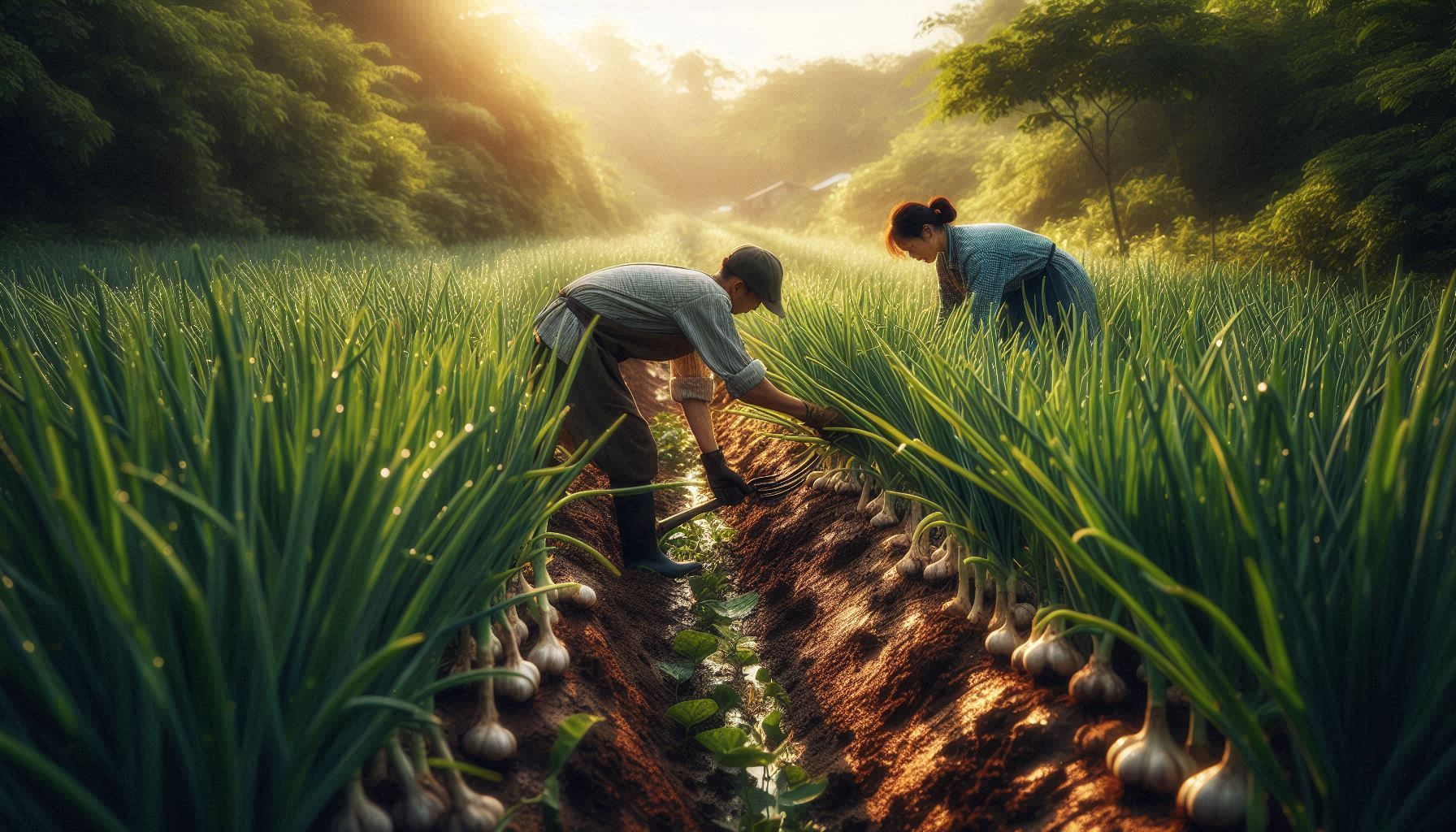
Garlic is ready for harvest when lower leaves turn brown, usually 6–8 months after planting. Carefully lift the bulbs using a fork to avoid bruising. Leave them in a shaded area to dry for 10–15 days. Proper curing increases shelf life and flavor.
9️⃣ Storage and Marketing
Store dried bulbs in a cool, ventilated area. Braiding or keeping them in mesh bags allows air circulation. Garlic can be sold directly to local markets, wholesalers, or processed into garlic powder or paste. Organic garlic fetches higher prices in the market.
Conclusion:
Garlic farming is a rewarding venture for small farmers. By following proper seed selection, soil preparation, planting, watering, fertilization, and pest management techniques, one can achieve high-quality yields. Organic garlic farming not only ensures better profits but also promotes sustainable agriculture. With patience, care, and consistent practices, small farmers can turn garlic cultivation into a profitable and sustainable livelihood.