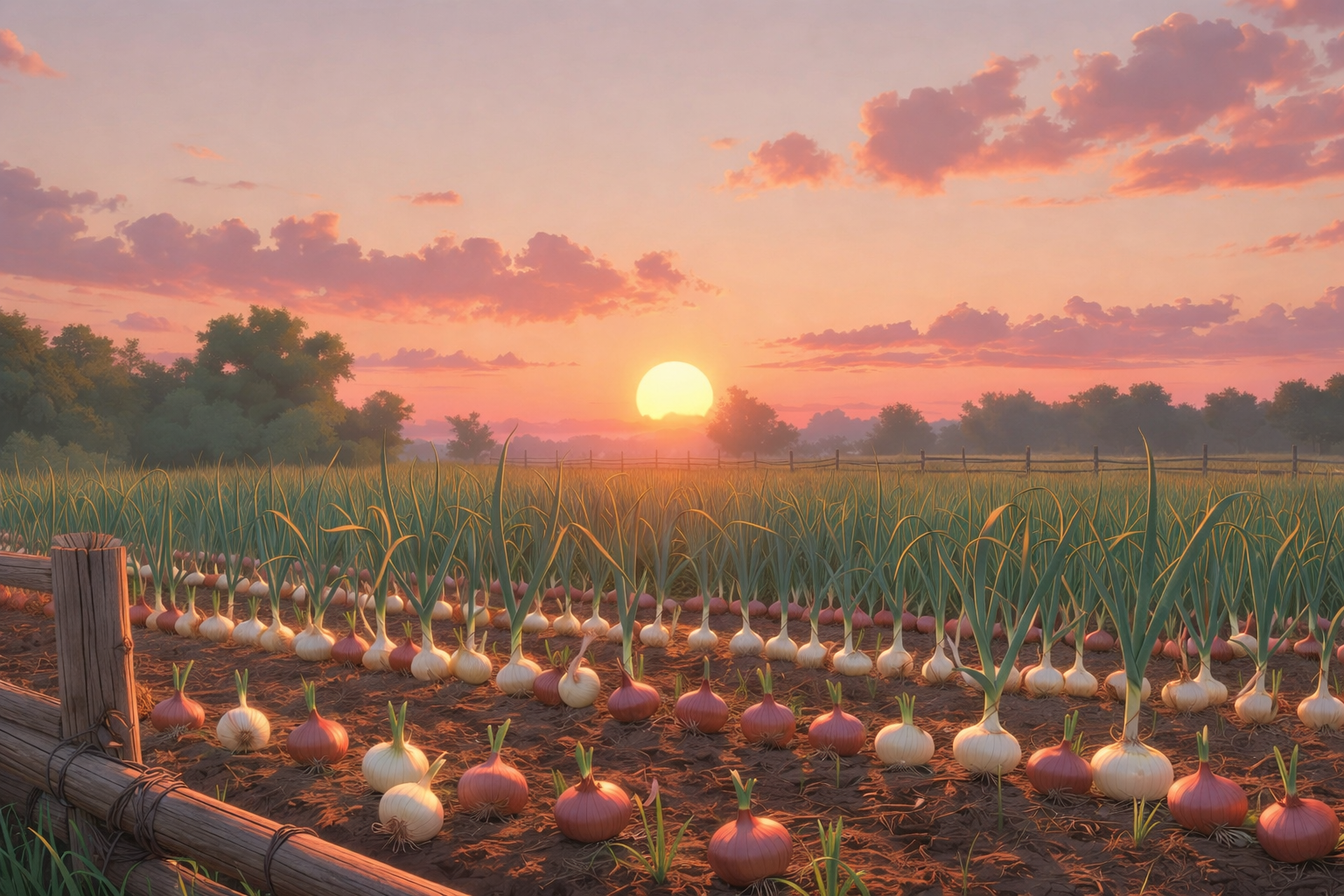
Onions are one of the most important vegetables in kitchens worldwide. From salads to curries, they are used daily, making them a profitable crop for farmers. Growing onions may seem simple, but doing it the right way can significantly increase your yield and quality.
Whether you are a small-scale farmer or manage a large field, following proper techniques ensures healthy plants and higher profits. With the right soil, water management, and pest control, your onion harvest can be bountiful and long-lasting.
Let’s take a step-by-step look at how to grow onions successfully in your field:
1. Choose the Right Soil and Climate
- Onions grow best in light, well-drained soil with a pH of 6–7.
- They need plenty of sunlight but can also tolerate cooler temperatures.
- Proper soil preparation ensures strong growth and a healthy harvest.
2. Select Quality Seeds or Sets
- Use fresh, disease-free seeds or onion sets from trusted suppliers.
- Local varieties work well in your region, while hybrid seeds may provide higher yields.
3. Planting Techniques
- Plant seeds or sets 1–2 cm deep in raised beds or rows.
- Maintain 15–20 cm between plants for proper growth and airflow.
4. Watering and Fertilization
- Water regularly but avoid waterlogging, as onions are sensitive to excess moisture.
- Use a balanced combination of nitrogen, phosphorus, and potassium.
- Organic fertilizers or compost improve soil fertility and overall yield.
5. Pest and Disease Management
- Common pests include thrips and maggots; fungal diseases like downy mildew can also appear.
- Crop rotation, natural pest control, and timely removal of infected plants keep onions healthy.
6. Harvesting and Storage
- Harvest onions when tops dry and fall over naturally.
- Dry the bulbs in the sun for a few days before storing in a cool, dry place.
7. Tips for Higher Profit
- Sell onions at peak market prices for maximum profit.
- Organic onions often fetch higher prices.
- Modern farming techniques like drip irrigation can reduce costs and increase yield.