Introduction:
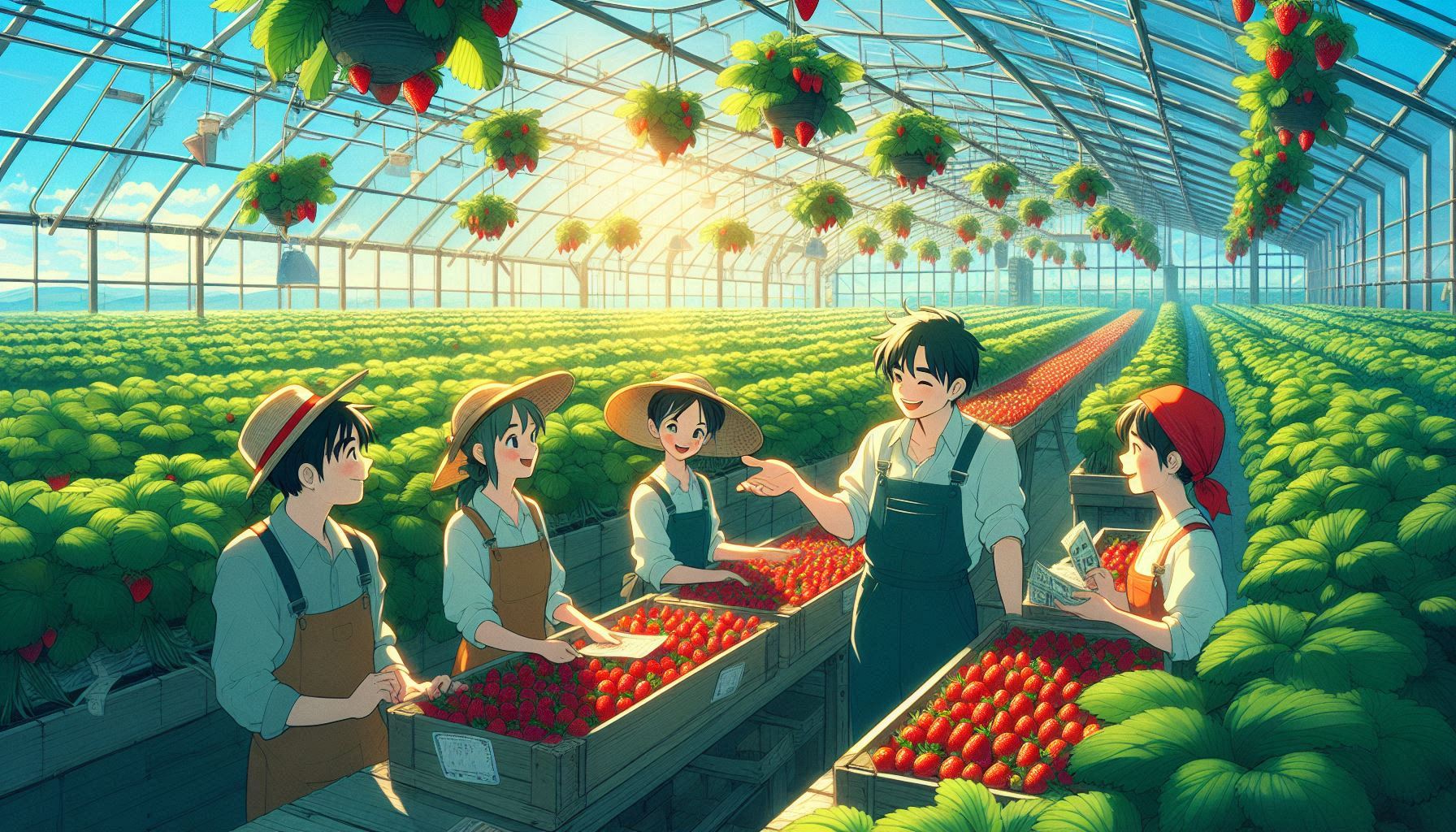
Strawberry farming in greenhouses is one of the most profitable and efficient ventures for professional farmers. Controlled conditions allow year-round production, better fruit quality, and protection from pests and extreme weather. With proper greenhouse management, commercial strawberry cultivation can generate high returns even on a large-scale farm.
Selecting the Right Strawberry Variety :-
Choosing the right variety is crucial for high yield and disease resistance. Popular greenhouse-friendly varieties include Albion, Sweet Charlie, and Chandler. Tissue-cultured saplings are preferred as they grow uniformly, flower early, and resist common diseases. Proper selection ensures consistent production and marketable fruit throughout the year.
Greenhouse Preparation and Environment Control :-
A well-prepared greenhouse ensures optimal growth. Maintain temperature between 18–25°C and relative humidity around 60–70%. Use raised beds, hydroponic systems, or grow bags with clean substrate. Proper ventilation, shading nets, and drip irrigation setup are essential to maintain uniform moisture and prevent fungal diseases.
Planting and Spacing Techniques :-
Space plants 25–30 cm apart and rows 40–50 cm apart to allow air circulation and easy harvesting. Stagger planting in blocks to achieve continuous harvest throughout the year. Ensure seedlings are planted carefully without damaging roots, and water immediately after transplanting to reduce stress.
Irrigation, Fertilization, and Mulching :-
Strawberries require frequent, uniform watering for healthy growth. Drip irrigation is recommended for commercial greenhouses, as it conserves water and reduces leaf wetness, minimizing fungal risks. Feed plants with balanced NPK fertilizers, micronutrients, and organic compost. Mulching with straw or plastic film helps retain soil moisture, suppress weeds, and keep fruits clean.
Pest and Disease Management :-
Common greenhouse pests include aphids, spider mites, and whiteflies. Diseases like powdery mildew, gray mold, and root rot can reduce yields. Use integrated pest management (IPM) techniques: neem-based sprays, biological predators, proper ventilation, and crop rotation. Regular inspection and hygiene practices are key to disease-free production.
Main Steps :-
1️⃣ High-Yield Varieties & Tissue-Cultured Plants
Select proven greenhouse varieties and quality saplings to ensure uniform growth and early flowering.
2️⃣ Optimal Greenhouse Environment
Control temperature, humidity, and light. Install drip irrigation and shading for consistent fruit quality.
3️⃣ Proper Planting & Staggered Blocks
Maintain correct spacing and stagger planting to achieve year-round harvest and maximum yield.
4️⃣ Balanced Nutrition & Mulching
Provide regular NPK fertilizers, micronutrients, and organic compost. Mulch to conserve moisture and reduce weeds.
5️⃣ Integrated Pest & Disease Management
Monitor pests, apply organic pesticides when needed, maintain hygiene, and ventilate greenhouse to prevent fungal infections.
Conclusion:
Greenhouse strawberry farming is highly profitable for professional farmers seeking year-round production. With careful planning, selection of high-yield varieties, proper greenhouse setup, fertilization, irrigation, and pest control, 1 hectare of greenhouse strawberries can yield 20–25 tons per year, generating significant returns. Staggered planting ensures continuous supply to markets, maximizing profit potential. Commercial strawberry cultivation combines efficient management, high-quality produce, and sustainable farming, making it an ideal long-term investment for large-scale farmers.